
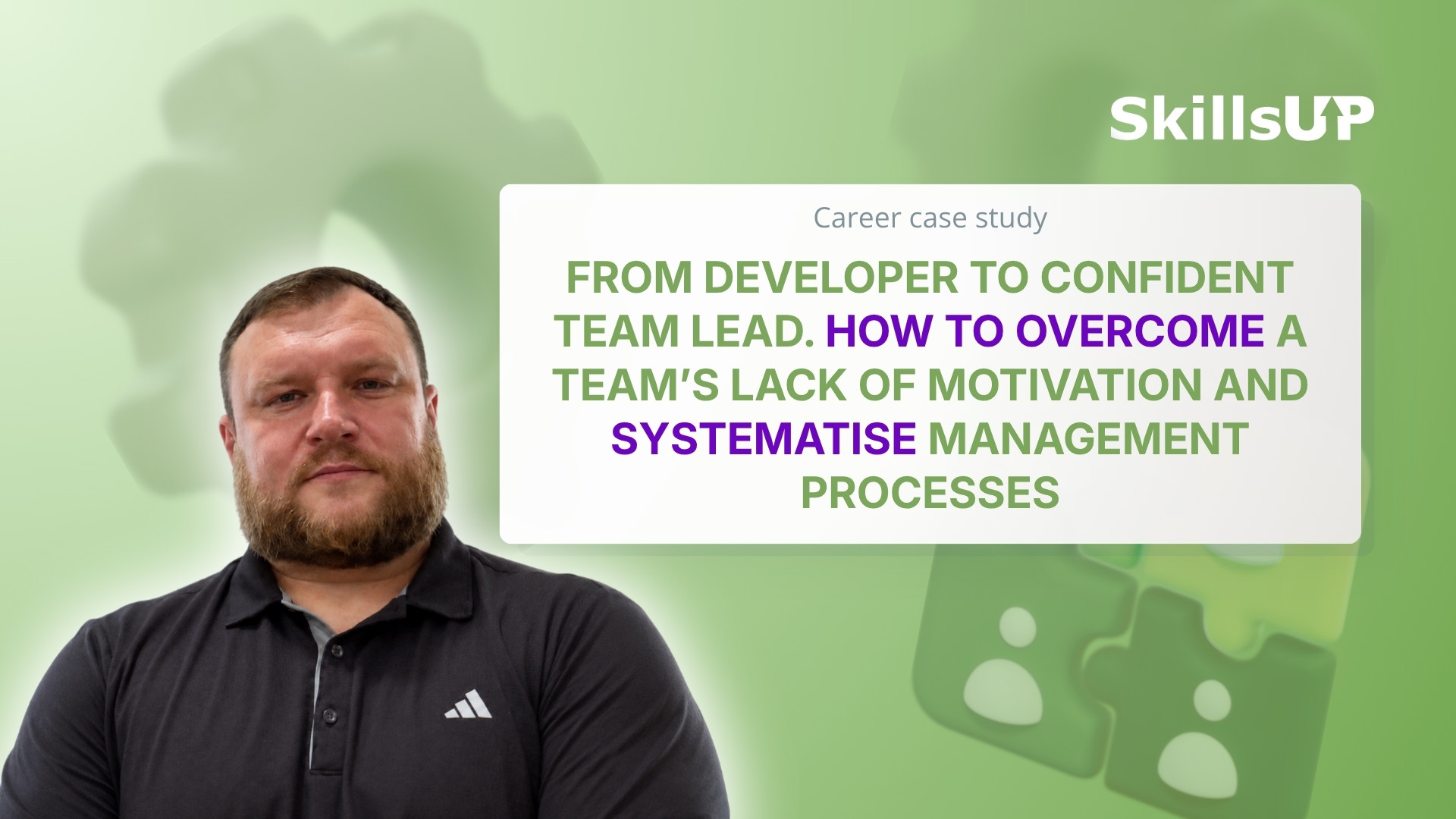
Student: Andrii
Position: Head of Software Operations Department at ATB (TB Market)
Program: People Manager Tool Kit by SkillsUp
Context and Motivation for Change
Andrii began his professional journey as an IT Developer, later becoming a DevOps Engineer before transitioning into management. Today, he leads a large department consisting of several teams.
The main trigger for enrolling in the course was a noticeable decline in motivation within one of his teams. He realized that employees were becoming less productive, more withdrawn, and he lacked the knowledge of how to address the issue without negatively impacting the people involved.
Learning Experience: A Structured and Convenient Format
The online format proved to be a significant advantage, allowing Andrii to balance learning with his full-time job without missing any classes.
To maximize knowledge retention, he developed his own learning system:
- Working with the course materials: Saved all presentations and took detailed notes on his tablet.
- Building a personal knowledge base: By the end of the course, he consolidated the key information from every presentation into one comprehensive reference document.
- Practical application: This document became his go-to handbook, which he continues to use in his daily work.
- Favorite exercise: Among all practical assignments, the motivation cards exercise left the strongest impression.
Transforming Mindset and Overcoming Barriers
The course helped Andrii look at his team from a completely different perspective. Instead of seeing situations only as a manager, he learned to better understand the motivation and challenges experienced by his employees.
He discovered that many people were trapped in their own "shell," limiting themselves strictly to their area of responsibility.
After applying the course principles, Andrii began having more open conversations with his team about the company's values. He realized that even experienced employees often didn't understand how their work influenced the business, and communicating these ideas clearly helped "unlock" the team's potential.
Today, Andrii believes that one of the most important qualities of a successful team is having a shared purpose and a clear understanding of why everyone is working toward the same goals.
Implementing Change: Roadmap and Early Results
During the course, Andrii created a detailed six-month action plan and immediately started implementing it.
His primary areas of focus included:
- Motivation assessment: Collecting up-to-date data on each employee's motivation level.
- Personal development: Creating individual development pages and growth plans for employees who needed the most support.
- Onboarding improvement: Redesigning the onboarding process by incorporating the tools and techniques learned during the course to help newcomers integrate more comfortably.
- Feedback culture: Shifting management practices toward providing significantly more regular and meaningful feedback.
Within just the first month of following his new roadmap, Andrii noticed tangible improvements:
- Overall team motivation increased.
- Employees became more open and engaged.
- Team members started sharing new ideas and raising work-related issues that had previously remained unspoken.
Who Does Andrii Recommend This Course To?
"I recommend it to anyone who is starting to build a team or moving from simply managing a group to building a real team. It's also incredibly valuable for managers who want to systemize their knowledge—especially those who, like me, moved into management directly from IT. After completing the course, you finally understand why you were doing certain things intuitively and how to apply those practices consciously."
Watch the full interview with Andrii and hear more of his insights on our YouTube channel: 🔗Link