
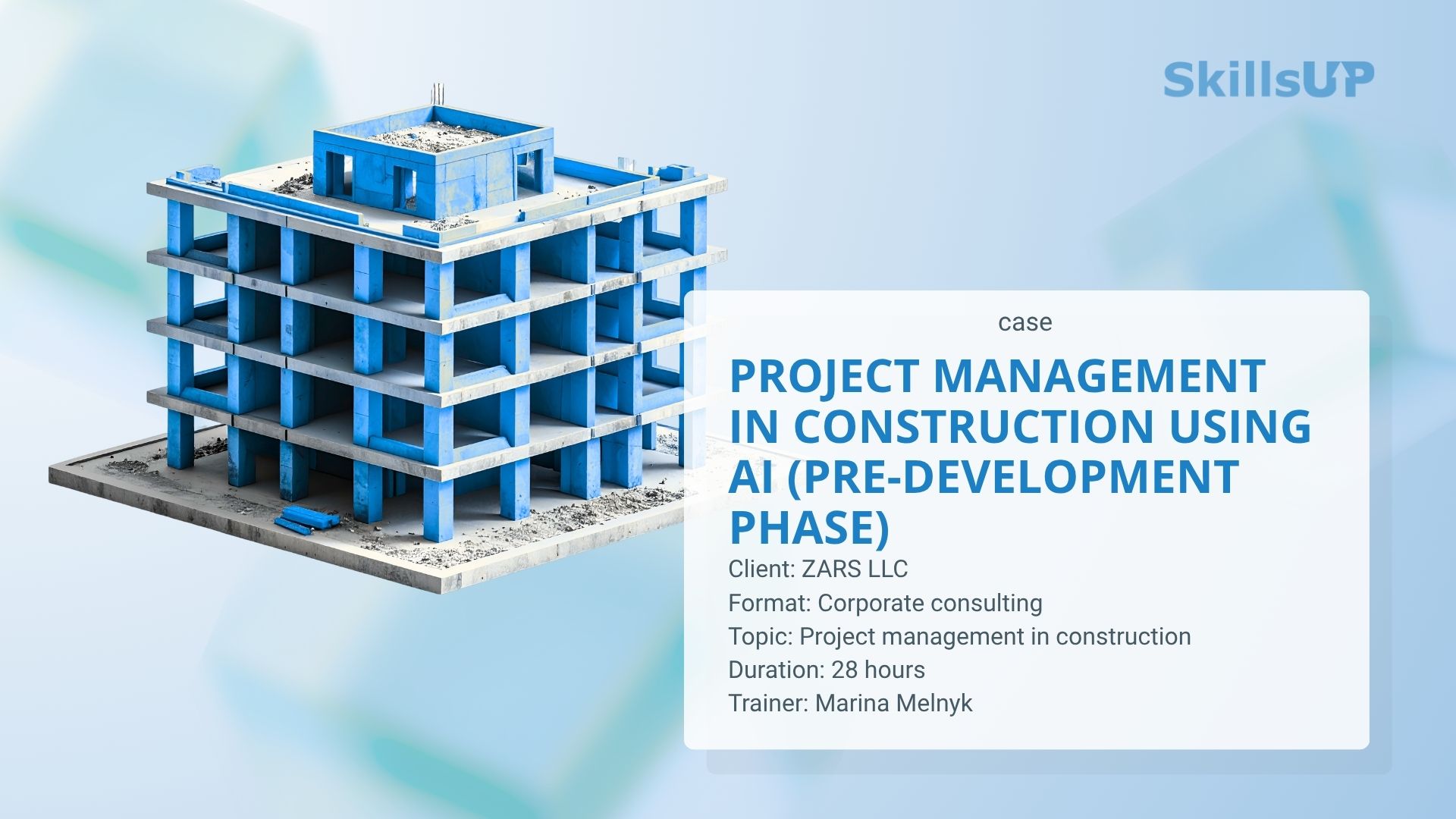
Client: LLC “ZARS”
Format: corporate consulting
Subject: Project management in construction
Duration: 28 hours
Coach: Marina Melnik
Context
Construction projects are complex systems with a large number of participants, dependencies, and risks.
Key decisions regarding:
- deadlines and budget
- volume and quality of work
- architectural and technical approaches
- development planning and organization
- are accepted at the predevelopment stage.
At the same time:
- Mistakes in the early stages are the most expensive
- lack of a systematic approach leads to delays and cost overruns
- classic planning approaches do not provide sufficient flexibility
Task
- to form a systematic approach to construction project management even before the start of implementation
- structure the future project (stages, dependencies, roles)
- practice key PM tools on a real case
- integrate AI into planning, analysis and decision-making processes
Decision
A practical project management program was implemented, where all tools were immediately applied to a real project at the pre-development stage.
The focus of the work:
Project structuring
- formation of requirements and design documentation
- building a WBS (work breakdown structure)
- definition of stages and execution logic
Planning
- calendar and network planning
- critical path definition
- coordination of contractors' work
Budget and control
- budget structure
- control of changes and deviations
- cost management approach
Communication and management
- working with stakeholders
- building a communication model
- coordination of project participants
Risks and changes
- risk identification
- construction of a risk matrix
- project change management
Using AI in the project
AI has been used as a tool to enhance management decisions:
- structuring complex tasks and documentation
- analysis of dependencies between stages
- preparation of solution options
- rapid development of scenarios (“what-if”)
- support in working with documents and communications
The focus was not on generation, but onenhancing thinking and decision-making speed
Result
The program included:
- the project is structured before the start of implementation
- the logic of work execution and key dependencies have been formed
- potential risks identified at an early stage
- an approach to budget and change management is laid out
- a systemic vision of project implementation has been formed
The use of AI has enabled the project manager to see how to analyze options faster; identify risks in advance; make more informed decisions; improve quality by establishing clear criteria before construction begins; and reduce the potential for changes, cost overruns, and delays.