Format: Corporate training and consulting program
Topic: Building and developing a professional brand
Implementation Period: July – October 2025
Author and Trainer: Maryna Melnyk (SkillsUp Training and Consulting Center)
The Context
Modern retail is a dynamic environment where business efficiency directly depends on the development of the team's managerial competencies. Aiming to strengthen internal leadership and optimize communication processes, Auchan Ukraine faced the need to develop the personal brands of its key executives and L&D managers.
Today, a leader is not just an administrator; they are an internal consultant, a talent development strategist, and a carrier of corporate culture. To effectively implement hybrid work formats, AI-driven process automation, and large-scale training programs, leaders need a strong professional brand. Such a brand allows them to be heard on all "internal stages" of the corporation, build trust, and exert influence without relying solely on formal authority.
The Objectives
During the preparation stage, a set of tasks was formed aiming at a deep transformation of the participants' approaches to self-presentation and leadership:
- Form the core of positioning: answer the question "What am I about as a professional, leader, and manager?".
- Work out self-presentation tools: learn to adapt the narrative for different audiences and formats (interviews, networking, public speaking, small talk).
- Overcome internal barriers: develop strategies to deal with the inner critic and tools to overcome psychological blocks.
- Master teamwork dynamics: learn to handle objections, skepticism, and shadow resistance within teams using assertive influence tools.
- Build a visibility system: expand the leaders' influence beyond their own departments, integrate regular communications, and develop a content strategy to solidify their image.
Solution and Program Architecture
To solve these tasks, Maryna Melnyk designed a structured, 10-session customized program that combined deep psychological diagnostics with practical business tools. The training stood out for its high level of practicality and the trainer's deep expertise.
Program Structure (10 key sessions):
- Diagnostics: who am I and where am I going? Analyzing the current state of the brand and defining success criteria.
- Personality Archetype: the brand's foundation. Understanding the natural style of influence and balancing authenticity with role expectations.
- Leadership styles: choosing your own. Forming a recognizable image, reviewing styles (from coaching to visionary), finding hybrid approaches.
- Self-presentation 101: how to talk about yourself. Creating short, medium, and long self-presentations, the "elevator pitch" technique.
- Building a leader's brand. Initiating changes without conflicts with authorities, creating internal proposals.
- Working with internal barriers and criticism. Identifying blocks and practicing tools to overcome them.
- Handling objections and shadow resistance in the team. Developing assertiveness and ready-made linguistic strategies.
- Visibility and influence in the company. Framing problems as opportunities, supporting colleagues' ideas, organizing global internal projects (e.g., "Leadership at all levels").
- Brand content: how to secure the image. Using storytelling (the hero's journey, challenges, victories), developing profiles on LinkedIn and internal corporate networks.
- Integration and future planning. The "Timeline" psychological exercise to visualize oneself 6 months ahead, approving the final Professional Positioning Plan.
Key Concepts and Toolset
The program was based on defining the leaders' core values: honesty, efficiency, expertise, developing others, and innovation. These values became the foundation for all decisions and core messages, making the brand consistent and trustworthy.
Special emphasis was placed on selecting archetypes. For example, for the target audience of executives, a combination of the Sage (depth of knowledge) and the Creator (generating new solutions) was chosen. This image was reinforced by specific language strategies — calm, structured communication that builds trust and encourages action without pressure.
To anchor visibility within the company, innovative formats were introduced:
- Regular experience-sharing in the format of 15-minute "cafe meetings".
- Facilitating discussions and finding a "common denominator" between departments.
- Involving employees in the nationwide "Leadership at all levels" educational project.
Results and Feedback
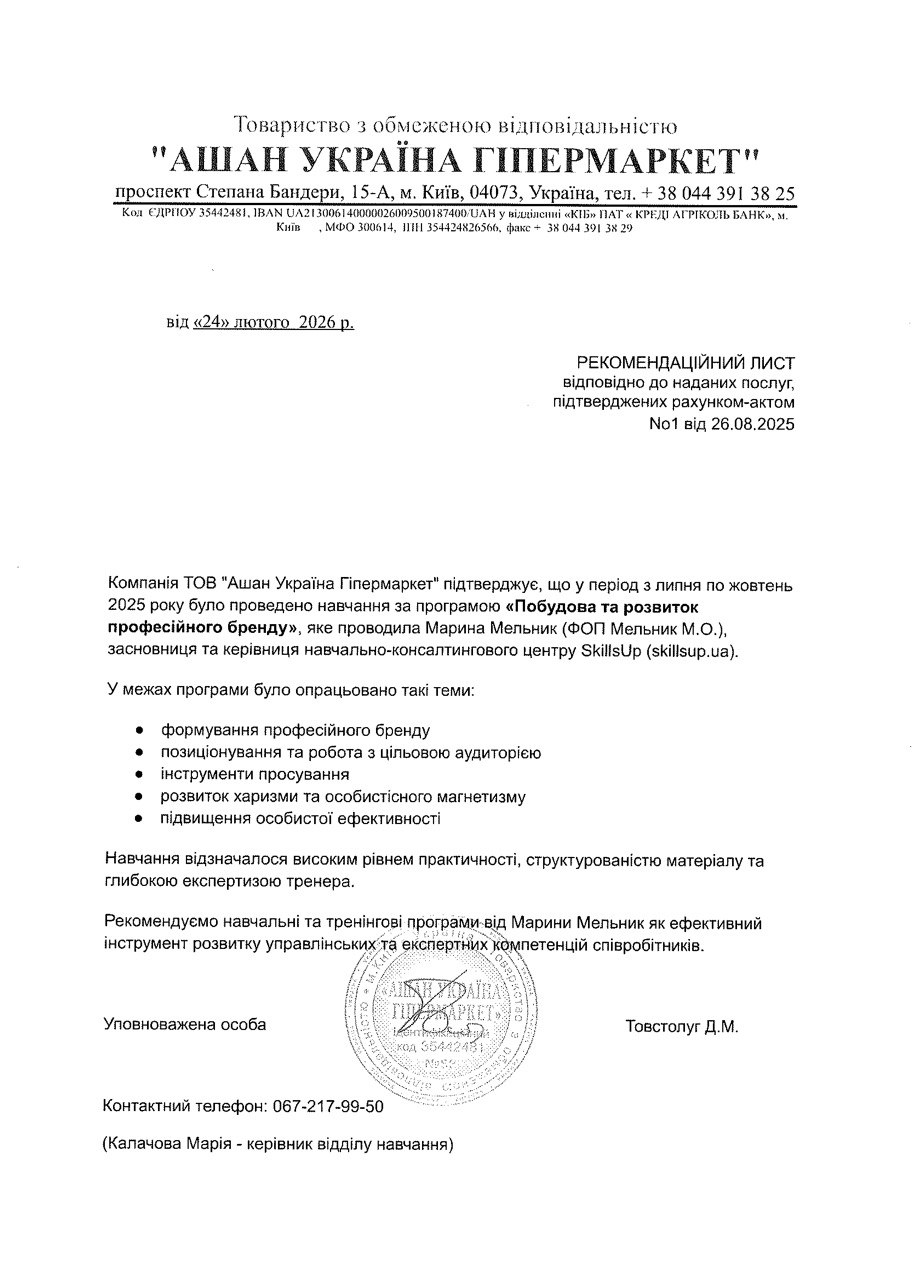
During the course (July – October 2025), a holistic picture of the participants' professional brand was created. The leaders formed a written positioning plan, updated their profiles on professional networks (specifically LinkedIn), prepared publications for external platforms (speka.ua), and learned how to effectively integrate stories into their content.
Intermediate results showed that the participants' brands became recognizable within the company: colleagues began reaching out more often for expertise, managers started showing more leadership initiatives, and maintained a stable tone of communication. A sense of consistency and trust emerged — a solid foundation for further growth.
This case study confirms that systemic work on a professional brand is not just an element of self-PR, but a powerful tool for increasing operational efficiency, improving cross-functional interaction, and scaling the impact of key talent in large corporations.